


phk77 | The Ever-Evolving World of Strategy Games: A Mental Challenge for Gamers
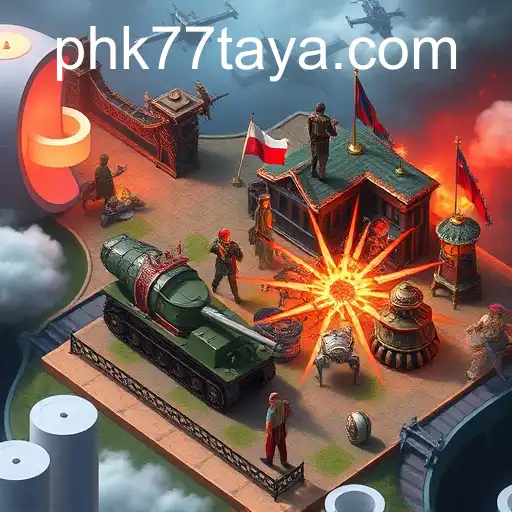
Strategy games have been captivating players for decades, offering a unique blend of mental challenge and entertainment. They require players to plan, strategize, and outthink their opponents, making them a favorite for gamers seeking a cerebral workout. As the gaming industry continues to evolve, strategy games have expanded beyond simple board and turn-based games to include complex simulations and real-time scenarios.
One of the notable aspects of strategy games is their diversity in settings and themes. From historical recreations on platforms like Civilization and Age of Empires, where players can rewrite history, to fantastical realms in games like StarCraft or Warcraft, where the fate of entire worlds is in the player's hands, strategy games offer endless possibilities. These games often require players to manage resources, strategize military tactics, and lead virtual societies, testing both analytical and creative thinking.
In recent years, there has been a surge in the development of strategy games that incorporate rogue-like elements, where permanent knowledge gained from each playthrough enhances the next. Titles like Into the Breach and Slay the Spire have gained popularity by blending strategic planning with the unpredictability of rogue-like gameplay, thus creating a dynamic experience that challenges players in new ways each time.
The role of artificial intelligence (AI) in strategy games has also evolved significantly. Advanced AI opponents provide challenging adversaries that adapt to the player's tactics, continually raising the bar for victory. This progression in AI technology ensures that players must continuously refine their strategies, maintaining the genre's reputation for intellectual rigor.
Online multiplayer strategy games further elevate the experience by introducing human opponents. Games like Fortnite and Clash of Clans enable players to compete with and against friends, strangers, or communities in strategic battles that test the limits of their town-building or combat-planning skills. The social element of these games adds another layer of complexity and excitement as players must not only outwit opponents but also collaborate and form alliances.
For those interested in solo experiences, the narrative-driven strategic RPG, such as Fire Emblem or XCOM, offers intricate storylines alongside traditional tactical gameplay. These games blend deep character development with strategic decision-making, providing a balance between personal involvement and intellectual challenge.
As the genre continues to grow, strategy games are increasingly exploring hybrid forms, integrating elements from other genres such as puzzle or action games. This fusion not only attracts a diverse array of players but also encourages innovative gameplay mechanics that keep the genre fresh and engaging. Strategy games are poised to remain a significant and dynamic category in the gaming world, continuing to captivate both veteran players and newcomers alike.
